Speaking

Helping audiences see the invisible forces shaping extraordinary organizations.

I am not trying to motivate anyone. I help people recognize patterns they have been living inside for years without ever having language for them — who holds authority, how judgment gets made, what responsibility quietly lands on whom, and what all of it builds over time.

The most important things we create are often invisible: trust, belonging, confidence, expectations, culture, organizational health. They never show up on a spreadsheet, and they decide almost everything.

My audiences range from early childhood conferences and workforce gatherings to executive teams, association events, and rooms full of women who have been carrying more than they were ever given credit for. What they have in common is that they want language they can use, not applause lines.

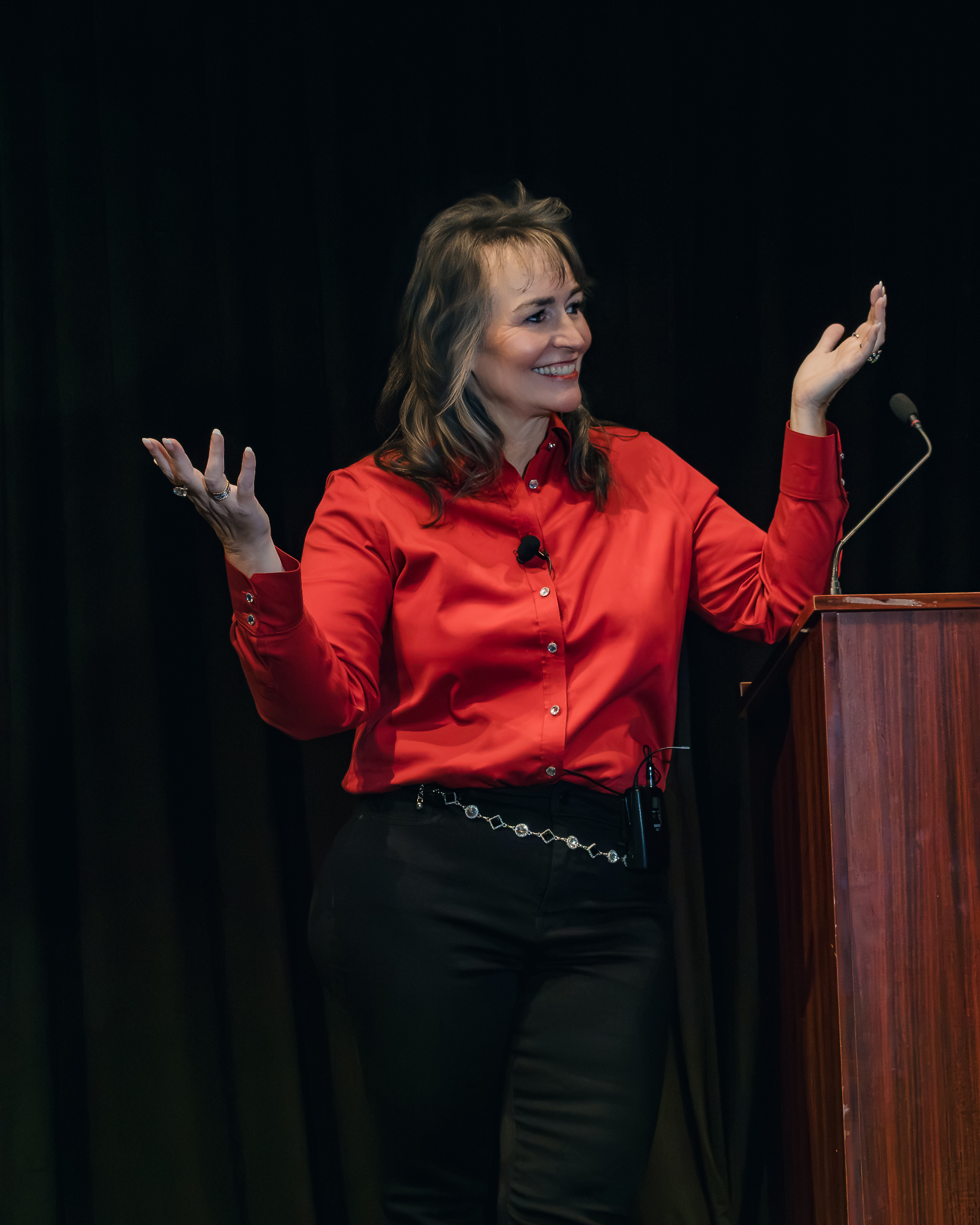
Kate Woodward Young speaking at a conference

My Work Explores

Eight threads that run through every session

Authority

Who gets to decide, who feels allowed to, and the distance between the two.

Decision-Making

How choices actually get made when the information is incomplete and the room is tired.

Judgment

The thing no checklist replaces, and the thing we rarely teach on purpose.

Responsibility

What people carry, what they were handed, and what was never theirs.

Organizational Sustainability

Whether the thing still works when the person holding it together steps away.

Workplace Culture

The agreements nobody wrote down and everybody follows.

Invisible Work

The effort that holds an organization up and never appears in a job description.

Systems Thinking

Why the same problem keeps returning wearing a different name.

Keynote Examples

Applications of one idea, not a catalog of five

Each of these points the same way of seeing at a different part of the work. Every one of them can be shaped to your audience.

01

Authority Without Apology

Most people do not lack authority. They lack permission to use the authority they already hold.

Ninety-eight percent of the early childhood workforce is women. Roughly one in four of the largest organizations in the field is run by one. That gap is not a confidence problem, and it will not be closed by telling capable people to speak up more.

This keynote looks at the difference between the authority a person actually holds and the authority they believe they are permitted to use. It names the habits, structures, and unspoken agreements that quietly keep responsibility and authority in two different rooms.

It is not a call to be louder. It is a call to stop apologizing for judgment that was earned from the seat, not the sidelines — and an invitation to the men in the room to be advocates rather than spectators.

The invisible thing this creates: whether a person believes they are allowed to decide.

Best Fit For

Conference keynotes, women's leadership events, association gatherings, executive and owner audiences, workforce summits, and any room where capable people are carrying more responsibility than authority.

Audience Takeaways

  • Name the distance between the responsibility you carry and the authority you are given.
  • Recognize the habits and structures that keep that distance in place.
  • Build authority that travels with the person, not the title.
  • Leave with language for using judgment out loud, without hedging or apology.
Tell Us More About Your Event
02

When the Tools Don't Fit the Work

Business tools belong in this work. One-size-fits-all thinking does not.

Organizations built on care need strong business practices, clear structure, and sound decision-making. But tools borrowed from other industries do not always translate into work built on development, relationships, trust, and human judgment.

This keynote looks at the tools, trends, and expectations shaping the work and asks a better question: are we supporting people, or asking people to fit systems designed for something else? It is a session about judgment — knowing which measure tells you something true and which one only looks tidy.

Children are not widgets. Teachers are not coverage. Parents are not products. The people doing the work are not machines.

The invisible thing this creates: whether people feel counted or measured.

Best Fit For

Mixed conferences, association events, professional development days, workforce gatherings, owner and executive audiences, and rooms examining quality, measurement, business practice, or culture.

Audience Takeaways

  • Understand why business tools must be translated for people-centered work.
  • Identify where one-size-fits-all thinking creates pressure, confusion, or disconnection.
  • Reframe decisions around the people and conditions actually in front of you.
  • Leave with language to question a trend without rejecting structure or good business practice.
Tell Us More About Your Event
03

Where Are My Ducks?

Sort the responsibility. Reduce the overwhelm. Stop carrying what was never yours.

Early childhood professionals are often expected to do the job, solve the problem, calm the parent, support the team, remember the details, manage the emotions, meet the deadline, and still smile.

This keynote gives audiences a practical, memorable framework to sort what needs to be done, delegated, documented, discussed, or ditched.

It is not about getting every duck in a row. It is about asking which ducks are actually yours.

The invisible thing this creates: where responsibility actually lives, and who quietly absorbs the rest.

Best Fit For

Mixed ECE audiences, directors, owners, teachers, family child care providers, school-age professionals, administrators, trainers, and anyone carrying too much inside the work.

Audience Takeaways

  • Recognize the difference between responsibility, support, and over-functioning.
  • Use the duck framework to sort decisions, tasks, conversations, and expectations.
  • Reduce overwhelm by naming what needs action and what needs boundaries.
  • Leave with practical language for delegation, documentation, discussion, and release.
Tell Us More About Your Event
04

Staff Who Stay

Creating workplaces people want to join, grow in, and stay with.

Staff retention is not just an administrator problem. It is a field-wide reality that affects teachers, assistants, directors, owners, children, and families.

This keynote looks at what helps people feel prepared, respected, supported, and connected to the work, and what quietly pushes good people out: out the door.

Staff stay when the work is clear, the culture is honest, the expectations make sense, and people can see a future for themselves in the profession.

The invisible thing this creates: whether people can picture a future for themselves here.

Best Fit For

Early childhood conferences, workforce events, professional development days, association meetings, owner/director events, and mixed teams working on staffing, culture, onboarding, morale, and retention.

Audience Takeaways

  • Understand retention as a shared field issue, not just an HR function.
  • Identify common practices that unintentionally push good people away.
  • Explore what helps staff feel prepared, respected, connected, and capable.
  • Leave with practical language for building workplaces where people can stay and grow.
Tell Us More About Your Event
05

Too Busy to Play

Reclaim wonder, curiosity, and joy in the middle of the work.

This is not about adding one more cute activity. It is about what happens when the adults in early childhood become so busy managing the work that play, curiosity, connection, and joy get crowded out of the day.

Early childhood was never meant to become a checklist race. When the adults lose access to wonder, children feel it too.

This keynote helps educators, teams, and program communities reconnect to the purpose, wonder, and humanity of early childhood.

The invisible thing this creates: the emotional weather the adults set without noticing.

Best Fit For

Teacher conferences, early childhood professional development days, family child care events, school-age and camp audiences, mixed ECE conferences, and events focused on play, curiosity, child development, or educator renewal.

Audience Takeaways

  • Reconnect play with professional practice, not just classroom activity.
  • Notice where pressure and busyness crowd out curiosity, joy, and connection.
  • Reflect on how adult energy shapes the child experience.
  • Leave with practical ways to protect wonder in the middle of real-world demands.
Tell Us More About Your Event
06

Build the Profession. Build the Child.

Because children thrive when the adults around them are seen, prepared, and respected.

Early childhood professionals are asked to do life-shaping work while too often being treated as replaceable labor.

This keynote connects the way we value, prepare, support, and trust adults with the way children experience care, learning, safety, and belonging.

We cannot build strong children while minimizing the adults who teach, care, lead, guide, and show up for them every day.

The invisible thing this creates: the professional identity people carry into every room.

Best Fit For

Mixed early childhood audiences, advocacy events, association conferences, workforce gatherings, professional recognition events, staff development days, and conferences focused on professionalism, quality, retention, or the future of the field.

Audience Takeaways

  • Connect adult professional identity with child outcomes and program quality.
  • Understand why respect, preparation, and consistency matter for both adults and children.
  • Reframe early childhood work as skilled, relational, and profession-building work.
  • Leave with language for advocacy, team conversations, and professional pride.
Tell Us More About Your Event

Bring Kate to Your Next Event

Looking for a keynote that leaves people saying "I'll never look at my work the same way again"?

Kate's sessions work for mixed audiences: classroom educators, owners, directors, family child care providers, association members, executive teams, workforce partners, and rooms full of people carrying more than their title suggests.